Hexa Words: Sort Associations
- 4.4
- Rating
- 500.00K
- Installs
- Free
- Price
 Analysis by App-foxy
I spent time with Hexa Words: Sort Associations as a compact word game built around a simple but surprisingly demanding task: finding relationships between words and arranging them into meaningful groups. It is the kind of puzzle that looks immediately approachable, yet becomes more thoughtful once several possible connections compete for your attention. Rather than asking me to build long words or race against a clock, it focuses on recognition, vocabulary, and the ability to step back when my first interpretation is wrong.
That makes it a useful choice for short breaks, quiet evenings, or anyone who enjoys wordplay without wanting a complicated rulebook. Severex has placed the game in the word category, and the current release is version 1.6.1. It is free to start, rated for Everyone, and supports devices running Android 8.0 or later. Optional purchases range from $0.99 to $9.99 per item, so the main question is not whether the concept is easy to understand, but whether the puzzle style suits the way you like to think.
How the association puzzles feel in everyday play
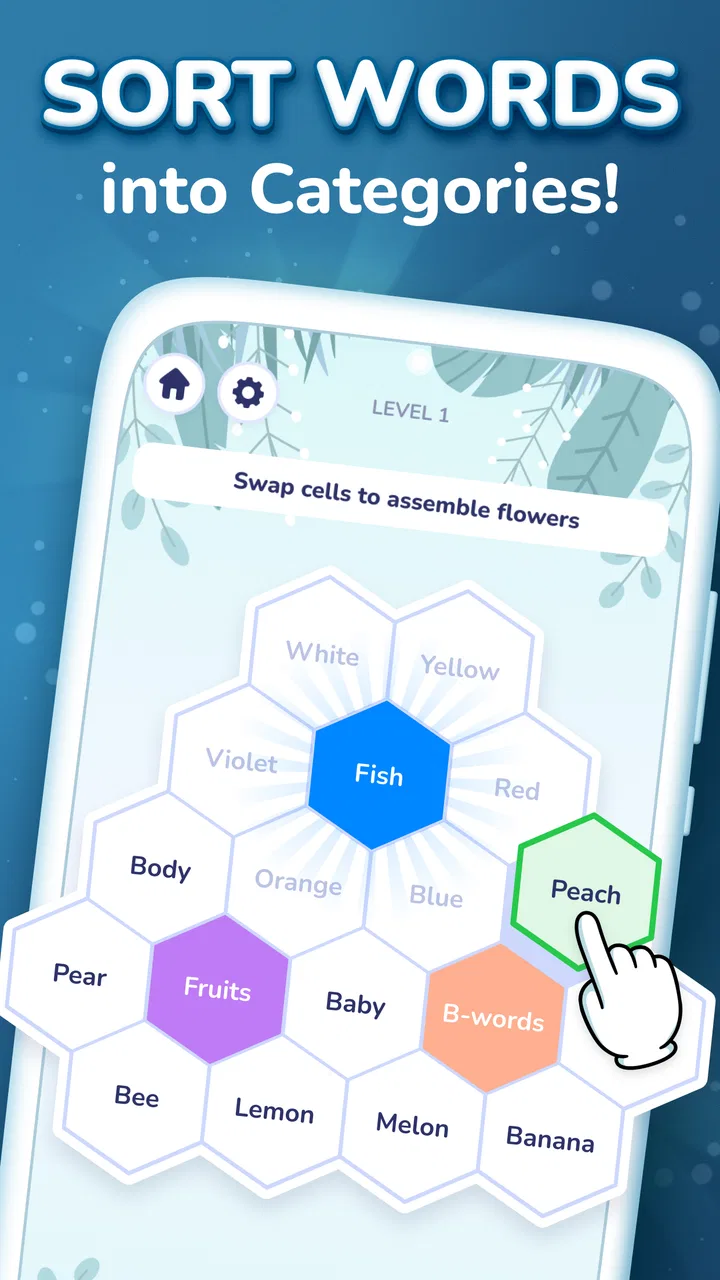
The central appeal is the feeling of sorting mental clues rather than merely testing spelling. I look at a collection of words, search for a shared idea, and try to place related terms together. Some links are direct, while others depend on a broader association. That difference is what gives the game its character: a group can seem obvious until another word makes me reconsider the category I had in mind.
You May Also Like

 Blood Strike: 2.5 Anniversary
Blood Strike’s Loadouts Turn Every Drop Into a Tactical Gamble
A close look at Blood Strike’s custom loadouts: how fast access to signature weapons reshapes its battle royale rhythm, rewards preparation, and narrows the gap between fights.

 Pandora - Music & Podcasts
Pandora’s Music Is Easy to Start, but Harder to Recover
Pandora’s strength is its low-effort path from a seed to a station. Its weak spot is how much confidence it asks you to place in connection, setup, and quiet recovery.

 8 Ball Pool
 Is Built on Rivalries, Rematches, and Routine
A close look at the rivalries, rematches, shared routines, and unanswered safety questions that turn a quick pool match into a persistent mobile community.

 Samsung Music
’s Quiet Strength Is Playing What You Already Own
Its reach comes less from spectacle than from dependable access to a personal library. That simplicity is both the app’s strongest retention engine and its ceiling.

 AccuWeather: Weather Radar
AccuWeather Review: A Quick, Clear Forecast for Everyday Decisions
For everyday plans, the best forecast is the one you can understand quickly. AccuWeather makes rain timing, radar, and local conditions easy to act on, with a few trade-offs.

 Hill Climb Racing
Why Hill Climb Racing Still Turns Crashes Into One More Run
A tiny car, a bumpy hill and one more upgrade: Hill Climb Racing keeps resurfacing because its simple chaos makes every near-miss feel personal.
More From Our News Desk



In practice, I found the best sessions were the ones where I avoided locking onto the first connection. A word may fit several themes, and moving it temporarily can reveal a stronger group elsewhere. This creates a useful rhythm of hypothesis, correction, and confirmation. The game rewards flexible thinking more than fast tapping, which is why it feels closer to a small daily mental exercise than to an arcade challenge.
The hexagonal presentation also gives the board a distinct identity. The shape is more than decoration because it makes the puzzle feel like a visual arrangement rather than a plain list of terms. I still spend most of my attention on the relationships between words, but the layout helps separate this experience from conventional crossword grids, anagrams, and word searches.
The most important skill is resisting an attractive but incomplete category. When several words appear to belong together, I now check whether the remaining terms can form a cleaner group before committing. That habit saves time and makes the game feel more strategic. It is also a practical tip for new players: treat every early answer as a possibility, not a final verdict.
A good fit for short, focused sessions
This is especially comfortable as a between-tasks game. I can play while waiting for an appointment, during a coffee break, or at the end of the day when I want something engaging but not noisy. A realistic use case is a commute with a few spare minutes: I can open a puzzle, work through the visible relationships, and stop after a satisfying solve without needing to remember a long story or manage a complicated progression system.
It also works for people who enjoy discussing answers with someone else. I sometimes find that another person sees a category immediately because they approach the words from a different angle. That makes the game suitable for casual shared play, even though the solving itself remains individual. Parents may also appreciate the Everyone age rating, particularly when looking for a word-based activity that can encourage conversation about meanings and categories.
Still, I would not recommend it to someone who wants a fast competitive word game. Players who prefer timed anagrams, head-to-head leaderboards, or a constant stream of rapidly changing challenges may find the association format too calm. It asks for patience and interpretation, not speed. Likewise, anyone looking for a vocabulary lesson with definitions, explanations, or structured language study should choose a dedicated learning app instead.
What makes the design more thoughtful than it first appears
One of the less obvious strengths is how the puzzle encourages elimination. I do not need to understand every word perfectly at the start. Sometimes I can identify one strong relationship, reserve a doubtful term, and use the remaining board to narrow down the alternatives. This makes the game approachable for players with different vocabulary levels, because solving can come from logic and contrast as much as from knowing an obscure term immediately.
Another useful approach is to separate literal and contextual associations. If a group seems to describe objects, I check whether the other candidates are actually connected by use, location, phrase, or a shared situation. This prevents me from treating every connection as the same kind of relationship. The game is at its best when it makes me notice that categories can be based on different layers of meaning.
I also learned to use a “parking space” for uncertain words. Instead of repeatedly forcing one term into a group, I mentally leave it aside and solve the clearer relationships first. Once the board becomes smaller, the ambiguous word often makes sense. That workflow is more effective than tapping randomly, and it gives the game a modest but genuine problem-solving depth that is easy to miss from the short store summary.
The trade-off is that an association puzzle can feel subjective when I see a connection the game does not accept, or when the intended grouping is less obvious than the alternatives. The experience depends heavily on whether the categories feel fair and readable to the individual player. I enjoyed the challenge, but people who prefer unambiguous rules may be more comfortable with crossword clues or standard word searches.
Current state, product evolution, and what I would expect next
At its current version, 1.6.1, Hexa Words feels like a focused product rather than an oversized word platform trying to cover every possible format. That focus is valuable: the identity is clear, and I never had to learn several unrelated modes before reaching the main activity. The release date of September 3, 2025 places the game in a relatively recent stage of its life, so I view the present build as a foundation for continued refinement rather than a finished catalogue of every idea the developer might explore.
The version information is useful mainly because it tells existing players which build they are evaluating today. I would not treat the number alone as proof of a particular feature or improvement. What I can say from using the current release is that the core experience remains centered on sorting word associations, and that clarity is its strongest asset. Players returning after an update should judge the game by how smoothly the current puzzles read and respond, rather than assuming that a new version automatically changes the underlying formula.
For someone already playing, the effect of staying current is likely to be most noticeable in the general feel of the present build: whether boards are comfortable to read, whether selections behave as expected, and whether the overall flow remains pleasant during repeated sessions. I would keep the game updated through the normal platform process, especially because a relatively early product can benefit from ongoing polish. At the same time, I would not install it expecting a completely different game after each release. Its appeal comes from the association mechanic, and that is the part I would want the developer to protect.
Severex has a promising base here, but the remaining gaps are easy to identify from the player’s perspective. The game would benefit from making its long-term variety feel as strong as its first impression. Association puzzles can lose impact if categories begin to feel predictable, so freshness matters more than adding visual decoration. I would also value clearer support for players who get stuck, provided that hints guide thought rather than simply removing the challenge.
That point matters because the best hint system for this kind of game should teach the player how to reconsider a word, not just reveal the answer. A gentle nudge toward a broader interpretation would preserve the satisfaction of solving. A blunt solution button would be convenient, but using it too often could turn the game into a sequence of guesses. For me, the ideal direction is assistance that respects the puzzle’s central skill: seeing relationships from more than one angle.
How it compares with familiar word-game alternatives
Compared with crossword apps, this game is less dependent on clue wording and more dependent on grouping. Crosswords give me a structured grid, crossing letters, and a strong sense of incremental confirmation. Hexa Words instead asks me to judge meaning across several terms. If I enjoy vocabulary but dislike filling a large grid, the association format is more immediately inviting. If I like the certainty provided by crossing letters, a crossword will probably feel more satisfying.
Compared with anagram games, the pace is slower and the mental task is broader. Anagrams reward quick rearrangement and spelling fluency, while this game asks why words belong together. That makes it a better alternative when I want to think conceptually rather than race through letter combinations. On the other hand, anagram fans may miss the rapid feedback and the excitement of producing a word under pressure.
Word searches are usually more visual and mechanical: I scan for known strings and trace them through a grid. Here, the important discovery happens before the action because I must understand the connection first. That gives the game more interpretive depth, but it also means a difficult board can feel slower. I would choose Hexa Words for reflection and category-based reasoning, and a word search when I want something relaxing that depends less on interpretation.
There is also a difference from educational vocabulary tools. Those apps often organize learning around definitions, pronunciation, repetition, or progress tracking. This game uses words as puzzle pieces rather than as lessons. I may encounter useful associations, but I should not mistake enjoyable exposure to language for a complete study method. Someone preparing for an exam or building a carefully measured vocabulary routine would be better served by a specialist tool alongside this game, not by replacing one with the other.
Who should download it and who should skip it
I would recommend it to players who like calm word puzzles, enjoy spotting themes, and do not mind revising an answer after discovering a stronger connection. It is also a good match for families or friends who enjoy talking through possible categories, and for adults who want a compact mental activity that does not require a large time commitment. The free entry point makes it easy to test the style before deciding whether optional purchases are worthwhile.
I would be more cautious if you need accessibility options tailored to a particular visual or cognitive preference, because the hexagonal board and dense word relationships may not suit everyone equally. I would also skip it if your priority is competitive matchmaking, a narrative campaign, or a highly measurable training plan. Those needs call for different kinds of games, even if they share the broad label of word entertainment.
Players concerned about cost should remember that the game is free to download while offering in-app items priced from $0.99 to $9.99 each. I would approach those purchases as optional support or convenience rather than as part of the basic reason to try the game. The sensible first step is to see whether the core association puzzles hold your attention. If they do, the purchase model becomes a personal decision; if they do not, spending more will not fix a mismatch with the genre.
The game has reached over one hundred thousand installs and holds a 4.1 average from around 1.9 thousand ratings, with roughly 254 written reviews. Those figures suggest a real audience and a generally positive reception, but I would read them as context rather than a substitute for personal taste. Word-association games can divide players: one person may find an indirect category clever, while another may find it frustrating. The written feedback is most useful when comparing other players’ reactions with the kind of challenge I personally enjoy.
Practical habits that improve the experience
My first recommendation is to scan the whole board before making several selections. The strongest group is not always the first one I notice, and early commitment can hide a more coherent arrangement. I also try to name the category in my own words before confirming it. If I cannot explain why the terms belong together, I probably have a tempting coincidence rather than a reliable solution.
Second, look for the word with the most possible meanings. It is often the piece that creates confusion, because it can fit multiple groups. I leave that word until the clearer categories have been tested. This approach turns uncertainty into information: every group I confirm reduces the number of plausible roles for the difficult word.
Finally, treat mistakes as part of the reasoning process rather than as wasted attempts. A failed grouping tells me which interpretation is too broad, and that can be more valuable than immediately searching for a new answer. The game becomes much more enjoyable when I focus on improving my reading of relationships instead of trying to maintain a perfect run.
Looking ahead, I would watch for how the puzzle variety develops, how the difficulty remains balanced for both newcomers and experienced players, and whether future releases refine the solving flow without adding clutter. I would also pay attention to whether assistance remains fair and whether the visual presentation continues to make relationships easy to inspect. Those are the areas most likely to determine whether the game remains a pleasant short-session habit or becomes repetitive over time.
My final view is positive but specific: this is not a universal word-game replacement, and it is not trying to be one. It succeeds when I want to sort ideas, question my first assumptions, and enjoy a quiet puzzle with a distinctive board layout. The current release gives Severex a solid base, while the game’s future value will depend on maintaining fresh categories and a fair sense of discovery. If that style sounds appealing, I think it is worth trying for free. Choose it for thoughtful association solving, not for speed, competition, or formal language study.
FAQs for Hexa Words: Sort Associations
01What is the main objective of Hexa Words: Sort Associations?
Hexa Words: Sort Associations is a word puzzle game designed to challenge your vocabulary and cognitive skills. The main objective is to connect hexagonal tiles by forming meaningful words and associations. Players must strategically sort and link words to progress through levels, enhancing their language skills and mental agility.
02Is Hexa Words: Sort Associations suitable for all age groups?
Yes, Hexa Words: Sort Associations is suitable for players of all ages. The game offers varying levels of difficulty, making it accessible for younger players while providing a challenge for adults. Its educational nature makes it a great tool for learning and improving vocabulary in a fun and engaging way.
03Does Hexa Words: Sort Associations require an internet connection to play?
Hexa Words: Sort Associations can be played offline, making it convenient for users without a constant internet connection. However, certain features like leaderboards and updates may require internet access. This makes it perfect for on-the-go gaming without relying on Wi-Fi or data.
04Are there any in-app purchases in Hexa Words: Sort Associations?
Yes, Hexa Words: Sort Associations includes in-app purchases. Players can buy hints, additional levels, or premium features to enhance their gameplay experience. While the game can be enjoyed without spending money, these purchases can provide helpful advantages for progressing through challenging levels.
05What platforms is Hexa Words: Sort Associations available on?
Hexa Words: Sort Associations is available on both Android and iOS devices. Users can download the game from the Google Play Store or the Apple App Store, ensuring compatibility with a wide range of smartphones and tablets. This allows players to enjoy the game on their preferred platform.
Pros
- Engaging word puzzles boost vocabulary.
- Simple interface for seamless navigation.
- Adaptive difficulty keeps players challenged.
- Offline mode available for on-the-go play.
- Minimal ads enhance gaming experience.
Cons
- Limited daily puzzles can feel restrictive.
- No multiplayer mode for social play.
- Hints can be expensive to purchase.
- Occasional bugs hinder gameplay smoothness.
- In-app purchases necessary for full features.

Hexa Words: Sort Associations
Gallery